 Cordia Homeschool
Deschooling in Australia: What It Is and How Long It Takes
TL;DR
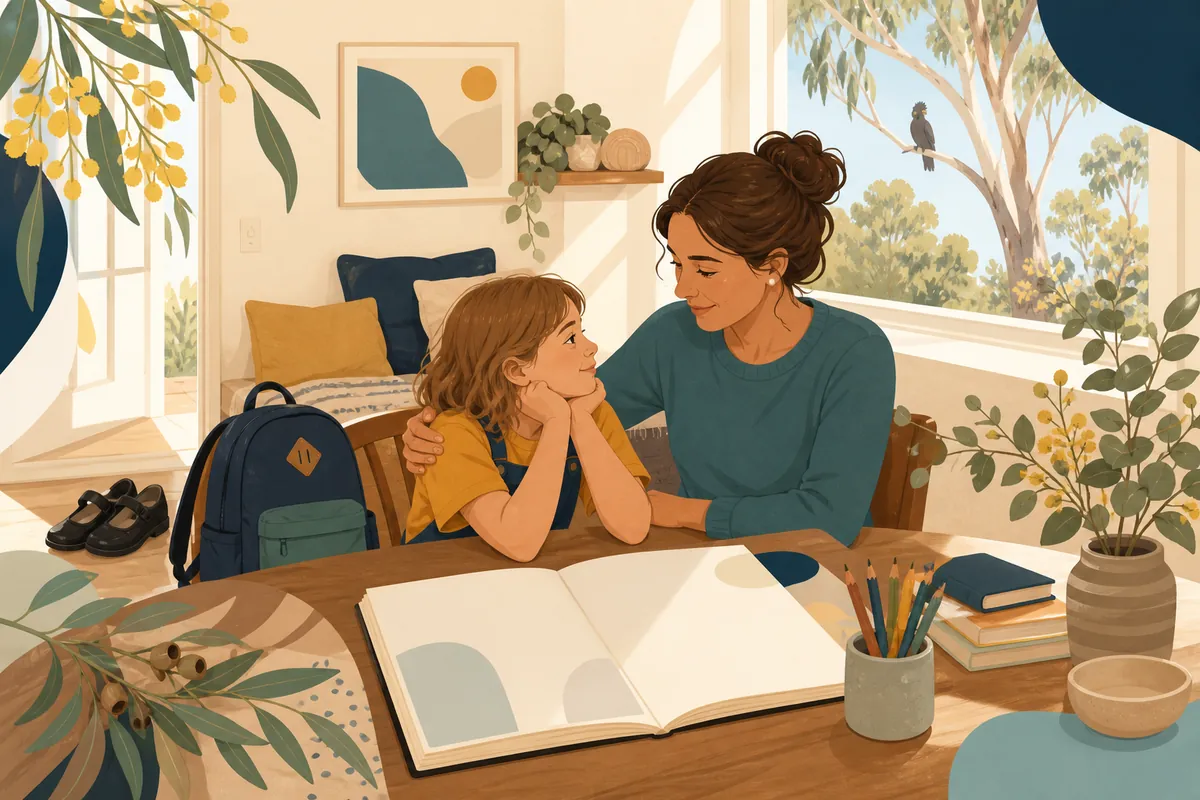
Deschooling is the settling-in period after leaving school, where families deliberately step back from school-style routines before starting formal home education. Most Australian parents find it takes roughly one month per year their child spent in school, though this varies widely and there's no official rule. You can usually still register during this time, as long as you're honest with your regulator about where you're at.
Deschooling is the settling-in period after a child leaves school, where the family deliberately steps back from school-style timetables, worksheets and grading before starting formal home education, and it typically takes somewhere between a few weeks and a few months, often estimated at roughly one month for every year the child spent in school.
If you’ve just withdrawn your child, or you’re about to, and you’re wondering why everyone in the homeschooling groups keeps talking about “deschooling,” you’re in the right place. This is one of the most reassuring things to understand early, because it explains why the first weeks at home rarely look like a proper homeschool day, and why that’s completely normal.
What is deschooling, exactly?
Deschooling is the mental and emotional adjustment period between leaving a school environment and settling into home education, where a child (and often the parent) unwinds from school habits like bells, grades and constant instruction. It’s not a curriculum or a program, and no Australian regulator defines or requires it.
The term was popularised in broader education writing decades ago, but Australian homeschooling communities use it more specifically to mean the pause most families take before diving into formal lessons at home. During this time, children are typically not sitting at a desk doing set work. Instead, they’re reading what interests them, sleeping in, playing, helping around the house, or simply decompressing from a routine that may have felt rigid, anxious or exhausting.
For many families, especially those who withdrew because of bullying, anxiety, a diagnosis, or a mismatch between the child and the classroom, deschooling is also emotional repair, not just a change of timetable.
Why do so many Australian families need a deschooling period?
Most families need this period because children who’ve spent years being told what to learn, when to learn it and how to prove they’ve learnt it often lose touch with their own curiosity, and need time to rediscover it before formal learning at home can genuinely take root. Rushing straight into lessons frequently backfires.
Common reasons Australian parents report needing a deschooling stretch include:
- The child associates “learning” with stress, testing or being compared to classmates
- The child has never had unstructured time to explore a personal interest
- The parent needs time to unlearn the idea that home education has to mirror school
- The family withdrew mid-crisis (bullying, school refusal, a health issue) and everyone needs to recover first
- Younger siblings who’ve never been to school may need little to no deschooling at all
If your child left school reluctantly or under stress, it’s worth reading our guide on homeschooling a child with additional needs in Australia, which covers pacing and sensory considerations that often overlap with a longer deschooling window.
How long does deschooling actually take?
There’s no official timeframe, but the commonly shared rule of thumb in Australian and international homeschooling communities is roughly one month of deschooling for every year the child spent in school, though this varies enormously from a couple of weeks to six months or more.
A few patterns that tend to hold true:
- Younger children (Prep to Year 2) often need very little deschooling, sometimes just a week or two, because they haven’t built up as many school habits to unwind from.
- Primary-aged children who’ve had several years of school routine commonly need one to three months before formal work feels natural again.
- Teenagers, particularly those leaving after a difficult experience, often need the longest, sometimes several months, because they’re unwinding both the routine and the emotional weight of years in a system that didn’t fit.
- Parents deschool too. If you came from a school-educated background yourself, you may need to consciously let go of the idea that “real learning” only happens with a workbook and a bell.
There’s no test to pass and no certificate at the end. You’ll generally know deschooling is working when your child starts asking questions, picking up books unprompted, or showing curiosity about something specific, rather than needing to be entertained constantly.
What does deschooling look like day to day?
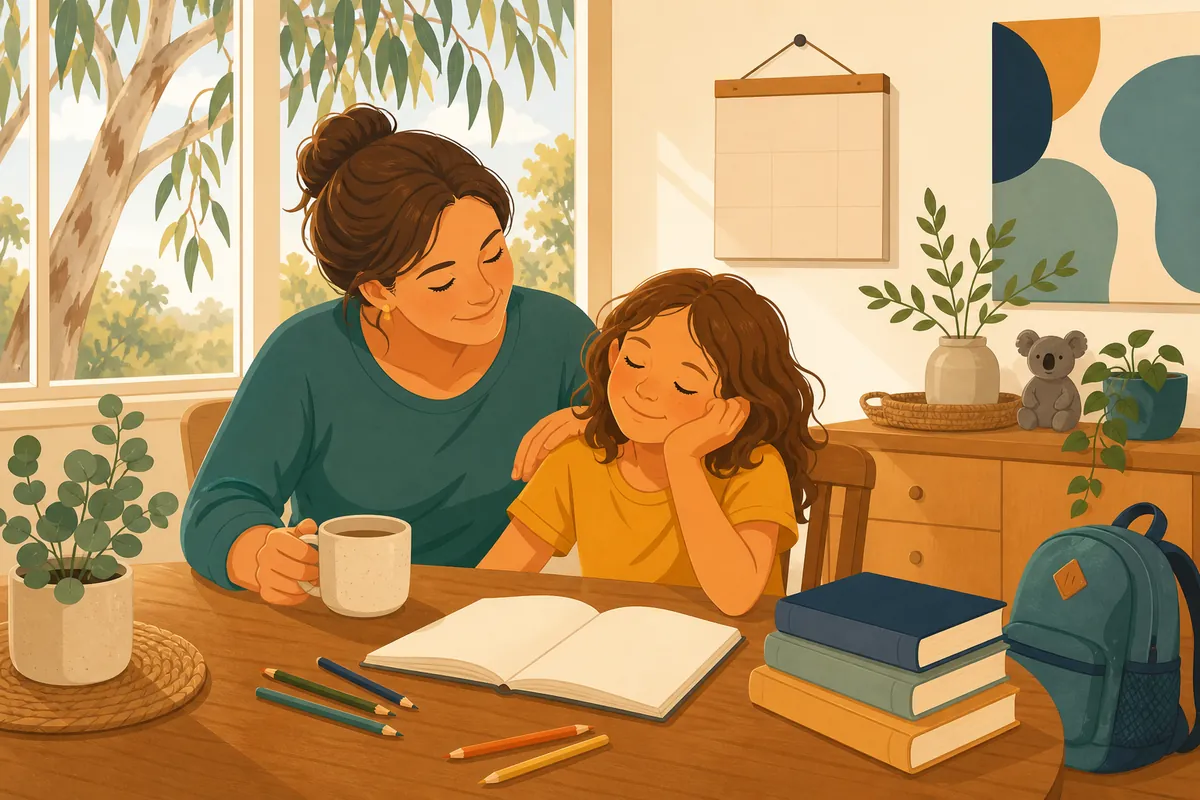
In practice, deschooling looks far less structured than a homeschool day: think free reading, documentaries, cooking, board games, nature walks, screen time within your normal family limits, and plenty of unscheduled hours, rather than set lessons or worksheets. The goal is rest and reconnection, not covering curriculum.
A rough (not prescriptive) week might include:
- Sleeping in, especially if your child was chronically tired from early starts
- Visiting the library and letting your child choose whatever they like, with no reading level attached
- Cooking together, which quietly covers maths (measuring), literacy (following a recipe) and life skills
- Outdoor time, unstructured and child-led
- Catching up with other homeschooling families, so your child sees that home education is normal and social
If you’re worried this looks like “doing nothing,” it can help to keep a simple diary of what your child does and asks about each day. Many parents are surprised, looking back, at how much genuine learning was happening even when it didn’t look like school.
Do I still need to register while I’m deschooling?
In most Australian states and territories, you’re required to register for home education within a set timeframe after withdrawing your child from school, and deschooling doesn’t pause that legal requirement, though it can shape what your early learning plan looks like. Registration rules differ by state, so check your local requirements.
For example, NSW and Queensland both require registration for home education, and Queensland’s Home Education Unit, run through the QCAA, expects an initial learning plan as part of that process. Victoria’s regulator, the VRQA, similarly requires registration and an outline of the educational program you intend to provide.
This is where many families feel caught: how do you write a formal learning plan while you’re deliberately doing very little formal learning? The honest answer is that your plan can reflect a gentle, exploratory start, with clearer structure building in over the following months. Being upfront with your regulator about this staged approach is generally far better than either delaying registration or presenting a plan you have no intention of following in the first weeks.
If you haven’t registered yet, our state-by-state guides cover the exact process, including for New South Wales, Queensland and South Australia, or you can find your state’s guide via the state guide index.

How do I know when deschooling is finished?
Deschooling is generally winding down when your child starts showing spontaneous curiosity, asking questions, seeking out books or activities on their own, and can sit with a task for a stretch without distress, and when you as the parent feel ready to introduce gentle structure. It’s a gradual shift, not a single milestone.
Signs it might be time to introduce a little more structure:
- Your child asks “can we do more of that” about something you did together
- Boredom starts prompting your child to create their own projects, rather than just complaining
- You notice a natural rhythm emerging, like always wanting to read after breakfast
- Your child can tolerate a short, focused task without anxiety or a meltdown
- You feel less anxious yourself about “wasting time,” and more curious about what to try next
There’s no need to reintroduce a full school-style day all at once. Many families ease in with one subject, often something the child already enjoys, before building a fuller week. If you’d like a simple starting structure once you’re ready, our guide to a realistic weekly homeschool schedule for Australian families walks through what a genuinely manageable week can look like.
What if my child (or I) struggles during this time?
Struggling during deschooling is common, and it doesn’t mean home education isn’t working; it usually means more time, a gentler pace, or outside support is needed, rather than a sign to abandon the approach or rush back into formal lessons. Reaching out early tends to help more than pushing through alone.
If either of you is finding it hard:
- Connect with other homeschooling parents locally or in Australian online groups. Hearing “that was normal for us too” is often exactly what’s needed.
- Talk to your state’s home education association or regulator; most have staff used to supporting new families through exactly this stage.
- If your child shows ongoing distress, withdrawal, or you’re worried about their wellbeing, it’s reasonable to speak with your GP or a paediatrician, particularly if the withdrawal from school was linked to anxiety, bullying or a diagnosis.
- Be honest with yourself about your own deschooling. Parents who came through the school system often carry the loudest inner voice saying “we should be doing more,” and that voice is rarely a reliable guide in the first few months.
You’re not behind. There is no official race, and a slower, calmer start tends to produce a far more sustainable home education experience than forcing formal work before anyone is ready for it.
How does deschooling fit with state homeschool registration timelines?
Because registration timeframes and requirements differ across Australia, how you weave deschooling into your paperwork depends on your state or territory, so it’s worth confirming your specific obligations early rather than assuming what applies elsewhere in Australia applies to you.
Broadly:
- Most states require you to notify or register within a set number of days or weeks of withdrawing your child from school
- Some require an initial learning plan or program outline at the point of registration
- A period of lighter, exploratory activity can usually be reflected honestly in that plan, especially if you note that structure will build over the coming term
- The Australian Curriculum is the reference point most states expect home education programs to have regard to, even while you’re easing in
If you haven’t started this process yet, our free Start Wizard takes about two minutes and helps you work out what registration and planning look like for your family and state, without needing to have all the answers upfront. You can also browse Cordia’s pricing and founding family details if you’re weighing up support options once you’re ready to move past deschooling and into a fuller home education rhythm.
Deschooling isn’t wasted time, and it isn’t a detour from “real” home education. For most Australian families, it’s the foundation that makes the rest of it work.
Sources
Frequently asked questions
Is deschooling an official requirement in Australia?
No. Deschooling is not a legal or regulatory term used by any Australian state or territory education authority. It is a widely used community concept describing the settling-in period after leaving school, and no regulator asks you to prove you have done it.
Can I register for home education while still deschooling?
Generally yes, though the process and expectations vary by state. Most authorities want to see a learning plan once you register, so many families use the deschooling weeks to observe their child and build that plan gradually rather than delaying registration altogether.
What is the one month per year of school rule?
It is an informal guideline shared widely in homeschooling communities, suggesting roughly one month of deschooling for every year a child spent in a school setting. It is not a scientific finding or an official recommendation, just a rough, commonly cited starting point.
Do older children and teenagers need longer to deschool?
Often yes. Teenagers who have spent many years in a school system, and who may be dealing with anxiety, burnout or bullying, frequently need more time to decompress than younger children who have had less schooling to unwind from.
What if my child still isn't interested in learning after a few months?
This is common and usually not a sign of failure. Gently reintroducing structure, following your child's interests, and seeking support from other homeschooling parents or your state association can help. If you remain worried, it's reasonable to talk to your GP or a paediatrician.
Get a home-education plan built around your child
Cordia turns everything above into a personalised, curriculum-aligned plan — with a free Start Wizard that pre-fills your state's steps in two minutes.